Usually, cells in the body grow, divide, perform their functions, and eventually die when they become old or damaged. However, genetic changes disrupt the systems that control cell growth, division, DNA repair, and cell death. As a result, abnormal cells may continue to multiply when they should stop. This further leads to tumor development, known as cancer.
Cancer can develop in almost any part of the body, including the breast, lungs, colon, liver, blood, skin, and brain. It occurs because of accumulated changes in DNA. These changes can affect genes responsible for controlling cell behavior.
While the exact cause is unknown, several factors may contribute to cancer, including:
- Tobacco use
- UV radiation
- Certain infections
- Environmental exposures
- Inherited genetic changes
- Age
- Lifestyle and metabolic factors
- Random cellular changes
Some genetic changes may cause cells to divide more frequently. Others can prevent damaged cells from undergoing apoptosis (the process of programmed cell death when it is damaged or no longer needed). Changes may also allow cancer cells to evade the immune system, stimulate blood-vessel formation, or invade surrounding tissues.
While early-stage cancer can be treated, unfortunately, advanced cancer doesn’t have a cure. That is why early diagnosis and treatment are crucial. Here is where the AMD1 ELISA kit comes into play.
What is AMD1?
AMD1, also known as S-adenosylmethionine decarboxylase 1, is an enzyme that participates in the polyamine metabolic pathway. It converts S-adenosylmethionine (SAM) into decarboxylated S-adenosylmethionine, which serves as an aminopropyl donor for the production of polyamines such as spermidine and spermine.
Polyamines are naturally occurring compounds involved in important cellular processes, including cell growth, proliferation, differentiation, and survival. Since cancer cells often have increased demands for growth and biosynthetic activity, alterations in polyamine metabolism can contribute to tumor development.
So, researchers often study the metabolic changes that occur in cancer cells with AMD1 levels.
What is ELISA?
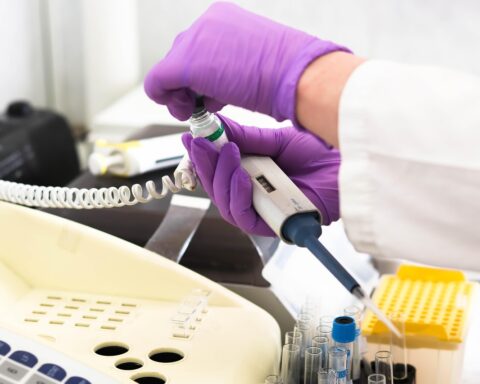
ELISA stands for enzyme-linked immunosorbent assay. It is a plate-based assay used to detect and quantify the analyte present in a biological sample. An analyte can be a protein, hormone, antibody, antigen, cytokine, etc. It works through specific antigen-antibody interactions.
An AMD1 ELISA kit is specifically designed to detect or quantify AMD1 protein in suitable biological samples.
In a typical assay, the AMD1 protein present in a sample interacts with antibodies that recognize the target. Additional assay components generate a measurable signal, and the signal intensity can be used to estimate the amount of AMD1 present.
Researchers can use samples such as cell or tissue lysates, serum, plasma, or other biological materials, depending on the specific kit design. However, they should always confirm the manufacturer’s stated sample types, detection range, specificity, and assay performance before beginning an experiment.
How AMD1 ELISA Kits Help in Cancer Research?
Measure AMD1 Expression
Researchers compare AMD1 concentrations between cancerous and non-cancerous samples to determine whether AMD1 expression is altered. This can help establish whether AMD1 is associated with a particular tumor type or experimental condition.
They may complement quantitative protein measurements with other techniques, such as qPCR, western blotting, immunohistochemistry, and transcriptomic analysis.
Investigate Tumor Progression
Researchers use AMD1 measurements to explore relationships between AMD1 expression and characteristics of tumor progression.
For example, researchers examine whether AMD1 levels change between different cancer cell lines, tumor models, treatment groups, or disease stages. In gastric cancer research, AMD1 expression was associated with several indicators of tumor aggressiveness.
Such studies can help researchers understand whether AMD1 is simply associated with cancer or may contribute to mechanisms underlying tumor progression.
Study Cancer Cell Proliferation
Rapid cell proliferation is a defining feature of many cancers. Since AMD1 supports polyamine production, changes in its expression may influence the availability of metabolites required for cellular growth.
In fact, it is found that AMD1 can promote cell proliferation and cell-cycle progression in breast cancer. So, researchers measure AMD1 alongside proliferation markers to investigate potential relationships between AMD1 activity and cancer-cell growth.
Evaluate Potential Therapeutic Targets
Researchers consider AMD1 as a potential therapeutic target. So, they often measure its expression. It has been found that AMD1 inhibition suppressed progression in chronic myeloid leukemia models, while AMD1 depletion affected leukemic stem-cell maintenance.
AMD1 ELISA measurements can help researchers monitor changes in AMD1 protein levels during inhibitor, gene-silencing, or other treatment experiments.
Support Biomarker Discovery
A potential cancer biomarker should be investigated across appropriate samples and experimental conditions before its clinical significance can be established. Researchers explore AMD1 as a potential biomarker because abnormal expression has been reported in different cancers.
For example, elevated AMD1 has been associated with poor prognosis in gastric cancer and breast cancer research.
ELISA-based protein quantification can contribute to these investigations by allowing researchers to compare AMD1 levels across sample groups and assess associations with other biological or clinical parameters.
However, an AMD1 ELISA result alone does not establish that AMD1 is a diagnostic or prognostic biomarker. Additional validation using independent cohorts and complementary analytical methods is necessary.
The Bottom Line
AMD1 is an important enzyme in polyamine biosynthesis and has emerged as an interesting target in cancer metabolism research. Evidence from gastric, breast, prostate, leukemia, and other cancer studies suggests that altered AMD1 expression can be associated with tumor growth, proliferation, aggressiveness, and prognosis.
AMD1 ELISA kits can support this research by enabling quantitative assessment of AMD1 protein in validated biological samples. From studying tumor-associated expression and cancer metabolism to evaluating experimental treatments and exploring biomarker potential, these kits can become a useful component of a broader cancer research workflow.
When selecting an AMD1 ELISA kit, researchers should consider factors such as sample compatibility, specificity, sensitivity, detection range, assay format, and validation data to ensure that the kit is appropriate for the intended study.