
Why the future of Medical Affairs will be defined by its ability to connect scientific independence, stakeholder intelligence, real-world evidence and responsible AI to better decisions and measurable healthcare value.
By Martina Riosalido Montero — Founder, MSL Expert & Mentoring® | Strategic development, mentoring and training for Medical Affairs and MSL teams | Doctoral Researcher, UIC Barcelona
Abstract
Medical Affairs is entering a decisive transition. For years, the function has been valued for scientific credibility, medical governance, evidence communication and non-promotional engagement. These foundations remain essential, but they are no longer sufficient to express the full strategic value of Medical Affairs in a healthcare environment shaped by accelerated evidence generation, real-world data, evolving health technology assessment requirements, artificial intelligence, fragmented stakeholder ecosystems and pressure to demonstrate meaningful value. This article argues that the next standard for Medical Affairs is not simply to become more active or more visible, but to connect scientific independence with decision intelligence. Using the MSL Expert & Mentoring® Strategic Impact Model – Activity → Quality → Impact – the paper proposes a practical model for moving beyond activity-based measurement toward quality of engagement, insight governance, stakeholder value and measurable medical contribution. Its distinctive contribution is to position quality as the missing bridge between activity and impact, and insight governance as the operating discipline that converts field signals into decisions.
Keywords
Medical Affairs; Medical Science Liaison; Field Medical Excellence; Decision Intelligence; Scientific Engagement; Real-World Evidence; Insight Governance; Stakeholder Strategy; AI in Medical Affairs; Medical Impact.
| Core thesis The future of Medical Affairs is not only about doing more scientific activities. It is about connecting scientific independence, quality of engagement and field intelligence to the decisions that shape evidence, access, clinical practice and patient value. |
Key messages
- Activity is necessary, but insufficient. Medical Affairs must demonstrate not only what it does, but the quality of what it enables and the decisions it improves.
- Quality is the missing bridge. Without quality, activity remains volume; without impact, quality remains invisible.
- Scientific credibility must evolve into strategic interpretation. The function must help organizations understand evidence gaps, stakeholder signals, clinical barriers and decision implications.
- Insights need governance, not just collection. The value of field medical intelligence depends on traceability, context, relevance, actionability and connection to decisions.
- AI will raise the standard. It will automate weak, repetitive work and amplify mature Medical Affairs models based on judgment, evidence quality and ethical interpretation.
- Medical Affairs must become strategically indispensable. Its future role is to connect scientific independence, evidence interpretation and field intelligence with better decisions across the healthcare ecosystem.
Original contribution of this article
Several publications already describe the strategic evolution of Medical Affairs, the need for stronger evidence generation, and the limitations of activity-based metrics. The distinctive contribution of this article is not to repeat that Medical Affairs must be more strategic, but to make the transition operational: how scientific independence can become decision intelligence without losing medical integrity.
The proposed perspective integrates four elements that are often discussed separately: the quality bridge between activity and impact, the governance of medical insights, the role of Field Medical as an ecosystem sensing capability, and the responsible use of data and AI to strengthen – not replace – scientific judgment.
This is the core imprint of the MSL Expert & Mentoring® approach: Medical Affairs excellence is not defined by volume of work, but by the disciplined conversion of scientific engagement into learning, alignment, decisions and visible medical contribution.
| Distinctive lens The article does not position Medical Affairs as simply “more strategic”. It frames the function as a decision-intelligence discipline grounded in scientific independence, insight governance, quality of engagement and traceable impact. |
Introduction: Medical Affairs is entering a new strategic era
Medical Affairs is entering one of the most important transitions in its history.
For years, the function has been recognized for scientific credibility, medical governance, evidence communication and non-promotional engagement with healthcare professionals. These foundations remain essential. However, they are no longer sufficient to define the full value of Medical Affairs in a rapidly changing healthcare environment.
Pharmaceutical and life sciences organizations now operate in a context shaped by accelerated evidence generation, increasing use of real-world data, evolving health technology assessment requirements, artificial intelligence, fragmented stakeholder ecosystems and growing pressure to demonstrate meaningful value for patients, healthcare professionals and health systems.
In this environment, Medical Affairs cannot remain only a scientific support function. It must become a strategic impact engine grounded in scientific independence and capable of informing better decisions.
This means moving beyond activity-based execution and becoming a function capable of transforming evidence, stakeholder signals, field medical insights and scientific engagement into better organizational decisions. The future of Medical Affairs will not be defined by how many activities it delivers, how many interactions it completes or how many insights it collects. It will be defined by the quality of the scientific value it creates, the decisions it informs, the trust it builds and the impact it enables across the healthcare ecosystem.
This argument is aligned with the broader evolution of the function. The Medical Affairs Professional Society has described the transition of Medical Affairs from an executional role toward a strategic function that represents the voice of the patient and the external healthcare ecosystem within industry [1]. McKinsey has similarly argued that Medical Affairs must strengthen enterprise leadership, data and analytics, differentiated medical strategy, evidence generation aligned with stakeholder needs and orchestrated medical engagement by 2030 [2].

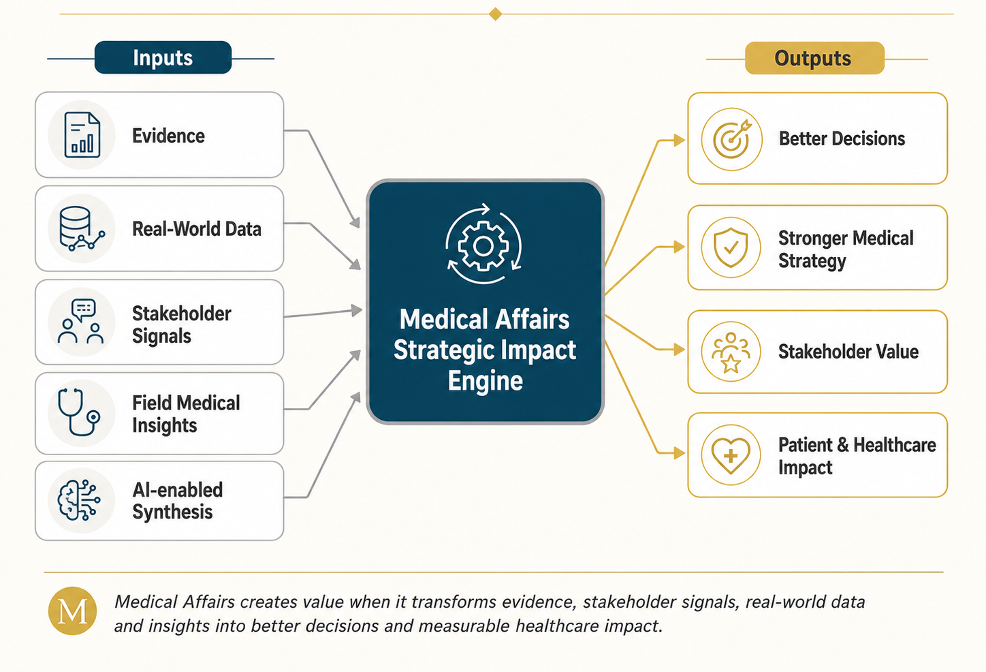
Figure 1. Medical Affairs as a Strategic Impact Engine.
The limitation of an activity-based Medical Affairs model
Many Medical Affairs teams are highly active. They deliver scientific exchanges, congress activities, advisory boards, medical education initiatives, internal trainings, publication support, evidence discussions and stakeholder engagement plans.
Activity matters. Without disciplined execution, there is no visibility, no consistency and no operational credibility. But activity alone does not prove value.
A high number of scientific interactions does not necessarily mean that the right stakeholders were engaged. A large number of insights does not necessarily mean that those insights were useful. A completed advisory board does not automatically mean that better decisions were made. A medical plan full of initiatives does not guarantee strategic influence.
This is one of the central tensions facing Medical Affairs today: the function is often busy, but not always strategically visible. A more mature model requires a progression from Activity to Quality to Impact.
Activity asks: What did we do? Quality asks: How well did we do it? Impact asks: What changed because we did it? This distinction is essential. Activity provides operational evidence. Quality demonstrates professional excellence. Impact shows strategic contribution.
Medical Affairs should not abandon activity metrics. It should place them in the right position. Activity is the operational base, not the final proof of value. The real question is not whether Medical Affairs is doing enough. The real question is whether Medical Affairs is enabling better decisions.


Figure 2. From Activity to Quality to Impact.
From scientific independence to decision intelligence
Medical Affairs has traditionally been associated with scientific communication: explaining evidence, responding to medical questions, supporting appropriate exchange and ensuring scientific accuracy. This role remains important. But the next level of Medical Affairs is not only communication. It is interpretation anchored in scientific independence.
The function must help organizations understand what the evidence means, where the gaps are, how stakeholders are interpreting data, which barriers affect clinical implementation and what signals from the external ecosystem should influence strategy. This is where Medical Affairs moves from scientific communication to decision intelligence.
In this article, decision intelligence in Medical Affairs refers to the structured ability to transform scientific evidence, stakeholder signals, field medical insights and contextual interpretation into better strategic decisions, while preserving non-promotional independence and scientific integrity.
This definition matters because decision intelligence is not simply analytics, dashboards or automation. It is the disciplined connection between evidence, interpretation, governance and action. Data may show a signal; Medical Affairs must determine whether that signal is valid, relevant, ethical, actionable and connected to a decision.
A repeated question about long-term safety is not simply a question; it may reveal a confidence gap. Low uptake of a therapeutic innovation is not only a commercial issue; it may reflect uncertainty about patient selection, lack of implementation pathways, limited experience, access barriers or unresolved evidence questions. An advisory board should not end with a descriptive report; it should inform decisions about evidence generation, medical education, stakeholder strategy, clinical barriers or cross-functional priorities.
In this sense, Medical Affairs becomes valuable not because it owns information, but because it helps the organization interpret complexity. The role of the function is to transform fragmented signals into structured medical meaning.
Evidence is becoming more dynamic
The evidence environment is changing rapidly. Real-world evidence is increasingly relevant across healthcare and regulatory ecosystems. The U.S. Food and Drug Administration defines real-world evidence as clinical evidence about the usage and potential benefits or risks of a medical product derived from analysis of real-world data [3]. The FDA also notes that advances in the availability and analysis of real-world data have increased the potential to generate robust evidence to support regulatory decisions [3].
In Europe, the Health Technology Assessment Regulation has introduced Joint Clinical Assessments at EU level. From 12 January 2025, new medicines for the treatment of cancer and advanced therapy medicinal products are subject to this process [4]. This matters for Medical Affairs because it reinforces the need to connect clinical evidence, comparator thinking, stakeholder needs, uncertainty and access-relevant scientific questions earlier and more systematically.
The European Health Data Space Regulation entered into force on 26 March 2025, starting a transition phase toward broader, secure access, sharing and reuse of electronic health data. The European Commission describes the EHDS as a framework intended to empower individuals in relation to their health data, enable secure and trustworthy reuse of health data for research, innovation, policy-making and regulatory activities, and foster a single market for electronic health record systems [5].
These developments mean that evidence can no longer be understood only as clinical trial data or publication output. Evidence is becoming more dynamic, more integrated, more real-world, more connected to access discussions and more relevant to health system decision-making.
Medical Affairs must therefore strengthen its ability to connect different evidence sources: clinical trials, real-world data, registries, patient pathways, stakeholder perceptions, clinical practice gaps and unmet needs. This does not mean diluting scientific rigor. It means expanding the strategic interpretation of evidence.
| Decision-oriented evidence questions The future Medical Affairs function must be able to answer not only what the evidence shows, but how it is being interpreted, where it is insufficient, which stakeholders need it, which decisions depend on it and what barriers prevent implementation in practice. |
AI will raise the standard of Medical Affairs
Artificial intelligence is already influencing the way Medical Affairs teams work. It can support literature monitoring, evidence synthesis, congress intelligence, stakeholder mapping, preparation of scientific interactions, medical writing workflows and insight analysis. But AI should not be framed as a replacement for Medical Affairs.
AI can process information, accelerate synthesis, detect patterns and reduce administrative burden. However, it cannot replace scientific judgment, ethical responsibility, clinical nuance, stakeholder trust, non-promotional discipline or human interpretation of complex medical conversations.
The European AI Act entered into force on 1 August 2024 and is being applied progressively. The European Commission notes that prohibited AI practices and AI literacy obligations entered into application from 2 February 2025, while governance rules and obligations for general-purpose AI models became applicable on 2 August 2025 [6]. For Medical Affairs, this reinforces the need for governance, confidentiality, traceability, source verification, human review and scientific accountability.
The risk is not that AI will eliminate strong Medical Affairs work. The risk is that AI will expose weak Medical Affairs models. If Medical Affairs is reduced to repetitive reporting, superficial synthesis, generic content delivery and low-quality insight capture, AI will challenge its perceived value. But if Medical Affairs is defined by scientific judgment, stakeholder interpretation, evidence strategy, ethical exchange and decision intelligence, AI becomes an amplifier.
The future belongs to Medical Affairs teams that use AI not to replace thinking, but to elevate it.
The MSL as a strategic sensor of the healthcare ecosystem
Within this broader transformation, the Medical Science Liaison remains one of the most important strategic assets of Medical Affairs. Pharma Mirror has recently highlighted the MSL role as a key field-based function within Medical Affairs, emphasizing the importance of scientific credibility, honest and unbiased exchange, communication, adaptability and insight generation [7].
This article builds on that conversation by reframing the MSL not only as a scientific communicator, but as a strategic sensor of the healthcare ecosystem. MSLs detect signals that the organization cannot easily see from headquarters: clinical uncertainty, implementation barriers, evidence gaps, stakeholder concerns, changes in perception, educational needs, patient pathway frictions, access-related tensions and emerging scientific questions.
However, field presence alone is not enough. The value of the MSL depends on whether these signals are transformed into structured intelligence. This requires a mature Medical Affairs system: clear priorities, high-quality scientific engagement, disciplined insight generation, internal forums for interpretation and cross-functional mechanisms to connect field intelligence with decisions.
Without this system, insights remain isolated comments. With this system, field medical work becomes strategic intelligence. This is why MSL excellence should not be measured only by frequency of interaction. It should be assessed by the quality of scientific engagement, the relevance of stakeholder strategy, the maturity of insight generation and the contribution to medical decision-making.
Recent work on MSL performance measurement has also highlighted the need for more balanced KPI frameworks and the difficulty of demonstrating value through activity measures alone [8]. This supports a broader Medical Affairs shift from activity reporting to impact evidence.
From insight collection to insight governance
One of the most urgent opportunities for Medical Affairs is to move from insight collection to insight governance. Many organizations collect insights. Fewer organizations consistently transform them into decisions.
An observation describes what someone said. An insight explains why it matters. A strategic insight connects an external signal to a decision, risk, opportunity, unmet need, evidence gap or change in stakeholder behavior.
For example, the observation that several clinicians asked about long-term safety data is useful, but still incomplete. A stronger strategic insight would state that repeated questions about long-term safety suggest a confidence gap in a specific patient profile, which may affect clinical adoption and indicates a need for clearer evidence contextualization, targeted medical education and potential real-world data discussion.
The difference is not semantic. It is strategic. The value of medical insights is not in their volume. It is in their capacity to improve decisions.


Figure 3. From Field Observation to Strategic Medical Insight.
What insight governance should look like
- Traceable: connected to a legitimate source, interaction or structured signal.
- Contextualized: interpreted within stakeholder type, geography, disease area, clinical setting or patient pathway.
- Relevant: linked to a medical objective, evidence gap, stakeholder need or strategic question.
- Actionable: able to inform a decision, priority, discussion, medical action or learning loop.
- Ethical: generated and used within non-promotional boundaries.
- Visible: communicated internally in a way that supports learning, alignment and decision-making.
Insight governance is where Medical Affairs demonstrates that it is not only listening to the field, but learning from it.
The new Medical Affairs maturity model
The evolution of Medical Affairs can be understood through four levels of maturity. At the first level, Medical Affairs operates as scientific support: reactive, accurate and necessary, but with limited strategic visibility. At the second level, it becomes an evidence interpreter, helping stakeholders and internal teams contextualize data and navigate scientific complexity.
At the third level, Medical Affairs becomes an ecosystem partner. It connects evidence with stakeholder needs, clinical practice, real-world data, patient pathways, access dynamics and external scientific priorities. At the highest level, Medical Affairs becomes a strategic impact engine: a function that transforms evidence, insights, engagement and stakeholder signals into better decisions, stronger priorities and measurable contribution.
This maturity journey does not mean becoming commercial. It does not mean compromising medical independence. It means making scientific independence more useful, visible and decision-relevant.


Table 1. Medical Affairs Maturity Model.
What Medical Affairs leaders should build next
If Medical Affairs is to become a strategic impact engine, leaders must develop capabilities beyond technical expertise. Six areas are particularly important.
1. Strategic evidence interpretation
Medical Affairs must be able to interpret evidence across clinical trials, real-world data, patient pathways, registries, stakeholder perceptions and health system needs. This requires scientific depth, methodological literacy and the ability to translate evidence into implications for different stakeholders.
2. Stakeholder strategy
The function must move beyond stakeholder access toward stakeholder prioritization, ecosystem mapping and scientific value creation. The question is not only who can be reached, but which stakeholders matter for the medical plan, evidence gaps, patient pathway and decisions that need to be influenced ethically.
3. Insight governance
Insights must become traceable, structured, contextualized and connected to decisions. This requires shared definitions, disciplined capture, synthesis routines, escalation pathways and leadership forums where insights can inform strategy.
4. Field medical excellence
MSLs and Field Medical teams must be trained not only in content, but in scientific engagement, advanced listening, strategic preparation, ethical influence, insight generation and impact communication. Field Medical Excellence is not a training catalogue; it is a capability system.
5. AI-enabled medical work
Medical Affairs must adopt AI responsibly, using it to improve synthesis, preparation and analysis while protecting compliance, confidentiality, scientific quality and human judgment. AI governance should become part of Medical Affairs excellence, not an external technical add-on.
6. Impact measurement
The function must measure not only activities completed, but quality delivered and impact enabled. This is the shift from reporting what Medical Affairs does to demonstrating what Medical Affairs changes.
| A practical leadership question Would the organization make weaker medical decisions if Medical Affairs were not involved? If the answer is unclear, the function may be active – but not yet strategically indispensable. |
The MSL Expert & Mentoring® Strategic Impact Model
A more mature Medical Affairs function should not only ask whether activities were delivered, but whether those activities improved the quality of scientific engagement and contributed to better decisions. In the MSL Expert & Mentoring® framework, this evolution can be understood through three connected layers.
- Activity – operational visibility: what was done, with whom, when and through which medical channel.
- Quality – professional excellence: how well the interaction, insight, evidence discussion or medical initiative was prepared, executed and interpreted.
- Impact – strategic contribution: what changed because of the work: a decision, priority, evidence question, stakeholder understanding, internal alignment or patient-relevant action.
The critical transition is not from activity to impact directly. The missing bridge is quality. Without quality, activity remains volume. Without impact, quality remains invisible. Medical Affairs excellence emerges when activity is disciplined, quality is intentional and impact is traceable.
This distinction is especially important because many organizations try to demonstrate Medical Affairs value by adding more indicators. The challenge is not only to measure more, but to measure better: to connect field activity, scientific engagement, insight generation and evidence work to the decisions they inform.
| MSL Expert & Mentoring® imprint Activity creates visibility. Quality creates credibility. Impact creates strategic relevance. The bridge between them is not reporting; it is professional judgment, structured interpretation and governance. |
Conclusion: making Medical Affairs strategically indispensable
Medical Affairs is becoming one of the most important strategic functions in the pharmaceutical and life sciences industry. Its future will not be secured by increasing activity volume, adopting more technology or collecting more insights alone.
It will depend on the function’s ability to become more evidence-driven, more connected to stakeholders, more disciplined in insight governance, more intelligent in its use of data and AI, and more capable of influencing decisions without compromising scientific independence.
Medical Affairs must continue to protect its non-promotional identity. But independence should not mean passivity. Ethical scientific leadership requires the ability to interpret complexity, challenge assumptions, connect external signals with internal strategy and contribute to decisions that improve evidence generation, stakeholder value and patient outcomes.
In this new era, the question is not only whether Medical Affairs is scientifically credible. The real question is whether its scientific independence is connected to the decisions that shape evidence, access, clinical practice and patient value.
That is the new standard: Medical Affairs as a disciplined, ethical and strategically indispensable source of decision intelligence.
Author bio
Martina Riosalido Montero is the Founder of MSL Expert & Mentoring®, a strategic development, mentoring and training initiative for Medical Affairs and MSL teams. With more than 20 years of experience across pharma and biotech in Medical Affairs, Marketing, Sales and Training, she supports organizations in strengthening scientific engagement, insight generation, Field Medical Excellence, strategic capability building and measurable medical impact. She is also a doctoral researcher at UIC Barcelona.
Disclosure statement
The author declares no specific conflict of interest related to this article. The views expressed are those of the author and are intended as a professional thought leadership perspective on the evolution of Medical Affairs.
AI-assisted visual disclosure
The figures and visual schematics included in this article were created with the assistance of artificial intelligence and subsequently refined and polished using ChatGPT. The conceptual framework, scientific interpretation, editorial decisions and final responsibility remain with the author.
References
1. Medical Affairs Professional Society. The Future of Medical Affairs 2030. MAPS. Available from: https://medicalaffairs.org/position-paper-future-medical-affairs-2030/
2. Algazy J, Garcia A, Ryan S, Westra A, Zemp A. A vision for medical affairs 2030: five priorities for patient impact. McKinsey & Company. 2023 Oct 11. Available from: https://www.mckinsey.com/industries/life-sciences/our-insights/a-vision-for-medical-affairs-2030-five-priorities-for-patient-impact
3. U.S. Food and Drug Administration. Real-World Evidence. Updated 2026 Apr 2. Available from: https://www.fda.gov/science-research/science-and-research-special-topics/real-world-evidence
4. European Commission. Joint Clinical Assessments. Public Health. Available from: https://health.ec.europa.eu/health-technology-assessment/implementation-regulation-health-technology-assessment/joint-clinical-assessments_en
5. European Commission. European Health Data Space Regulation (EHDS). Public Health. Available from: https://health.ec.europa.eu/ehealth-digital-health-and-care/european-health-data-space-regulation-ehds_en
6. European Commission. AI Act. Shaping Europe’s digital future. Available from: https://digital-strategy.ec.europa.eu/en/policies/regulatory-framework-ai
7. Dyer S. What Makes a Great Medical Science Liaison? Pharma Mirror Magazine. 2026 May 5. Available from: https://www.pharmamirror.com/career-center/what-makes-a-great-medical-science-liaison/
8. Dyer S, Hyder C, Kraemer J. Challenges of Key Performance Indicators and Metrics for Measuring Medical Science Liaison Performance: Insights from a Global Survey. Pharmacy. 2025;13(2):51. doi:10.3390/pharmacy13020051.