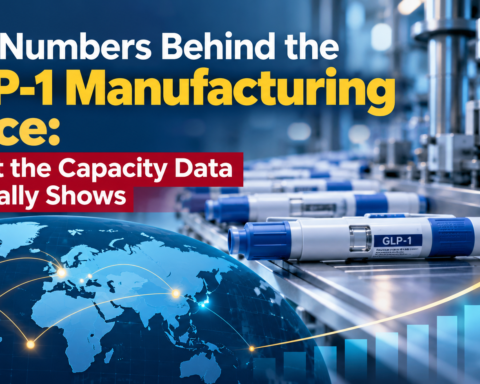
Commercial peptide supply now runs at kilogram and metric-ton scale, and only some partners can deliver it reliably. That limited pool makes partner choice a high-stakes decision for any launch. Size and reputation often shape early shortlists. Yet neither shows whether a partner can maintain batch consistency at high volume.
The partners that stand out in 2026 prove this through large-scale output and a clean compliance record. They can also keep supply steady for years after launch, which protects both timelines and cost. For patients, that steady supply decides how reliably they receive their medicine.
Why Has Commercial-Scale Capacity Become the Deciding Factor for a Peptide CDMO in 2026?
Commercial-scale capacity has become the deciding factor because peptide demand has outgrown the capacity of many plants. Peptide APIs were once produced in grams for relatively small patient groups. Newer treatments for obesity and diabetes now need hundreds of kilograms every year. That jump has changed what buyers expect from a peptide CDMO.
Higher volumes bring their own technical demands. A process that works well for clinical batches does not always hold up at commercial scale. Inside bigger vessels, heat moves and reactants mix differently than they did in smaller ones. When a process was never designed for these conditions, impurity levels can drift from one batch to the next.
Because this drift often appears only after scale-up, many teams now shortlist commercial partners during clinical studies. Waiting longer carries a real cost. A partner chosen only for early work may be unable to supply the launch. Replacing it then means a full tech transfer to a different site. Regulators will also expect data showing the new site’s material matches the original. Together, these steps can add many months to a planned launch timeline.
Choosing a partner that has already run commercial batches removes that detour from the start. The team can then spend those months preparing for launch, knowing its commercial supply is secure.
What Manufacturing Capabilities Separate a Top Peptide CDMO at Commercial Scale?
A top peptide CDMO picks the right synthesis route for each molecule and its required volume. It then backs that route with enough purification and testing capacity to release batches on time. All three stages must scale together, since the slowest one caps output.
Synthesis Routes Chosen for Sequence and Volume
The route comes first because it shapes every later step. Solid-phase peptide synthesis (SPPS) builds the chain one amino acid at a time and suits most sequences. Liquid-phase synthesis (LPPS) is often more efficient for short peptides needed in bulk. Longer sequences may need a hybrid route that joins separately made fragments.
Offering multiple routes allows a provider to match the method to the molecule. Neuland Labs, for example, runs SPPS and LPPS within one commercial peptide module.
Purification Capacity That Keeps Up With Synthesis
Whichever route is used, the crude peptide still carries many closely related impurities. Large-scale chromatography (preparative HPLC) removes them, and freeze-drying turns the result into a stable powder. These steps often set the true limit on how much finished peptide a site can release. If they are undersized, extra synthesis capacity simply sits idle.
Test Methods Built for Peptide Impurities
Each purified batch must then pass testing before release. Many peptide impurities differ from the main molecule by just one amino acid. Spotting them needs sensitive, well-proven methods and experienced analysts. That workload grows with every peptide that reaches the market. One new peptide drug won FDA approval in 2025, bringing the total to roughly 130 approved peptides. For a peptide CDMO, testing capacity deserves the same planning as synthesis capacity.
How Do Regulatory Track Record and Quality Systems Mark a Strong Peptide CDMO?
A strong peptide CDMO earns clean inspections from several major regulators. Behind that record are quality systems that keep batches consistent as volumes grow.
Inspection History Across Major Markets
The US FDA and the EMA each run a separate, detailed review, and Japan’s PMDA adds another. Passing all of these points to systems that perform the same way every time. Before signing, check recent inspection outcomes and any warning letters. Past commercial peptide approvals also count, since reviewers often raise similar questions.
Control Strategies That Hold From Clinical to Commercial Batches
That consistency starts with how the process is controlled during development. Impurity limits agreed early must still hold once batches grow. Providers that fix key process settings early rarely need to repeat validation later. Their batch records then show one steady impurity profile, which makes regulatory review smoother.
Disciplined Change Control After Approval
Even a well-controlled process keeps changing after approval, as steps are refined or equipment is replaced. Each change needs a formal assessment and, sometimes, a regulatory notice. Good change control lets a provider make these updates without interrupting supply. Clients should also be informed of changes early, since their own filings may need updates. Asking how past changes were handled shows whether this works in practice.
Why Should Supply Security Shape Your Choice of Peptide CDMO for Commercial Supply?
Supply security matters because new commercial capacity takes years to build, and any shortfall reaches patients directly. A peptide CDMO with dependable capacity and resilient sourcing keeps commercial supply steady from launch onward.
Capacity Reserved Ahead of Launch
Capacity is the first test of supply security, because demand after launch can outpace production within months. GLP-1 medicines showed this when rising prescriptions put several of them on FDA’s shortage list in 2022. The agency declared the semaglutide shortage resolved only in February 2025, nearly three years later. Building new plants will not shorten that kind of wait.
A secure partner therefore already runs qualified commercial lines, with room to scale as demand grows. Reserving slots on those lines before launch protects supply from the first commercial batch.
Raw Material Sourcing and Geographic Spread
Reserved capacity only helps if key inputs keep arriving on time. Protected amino acids and synthesis resins often come from just a few regions. A disruption in one country can then delay batches across many products. Providers that qualify a second supplier and hold safety stock of critical inputs reduce that exposure.
Solvent Use and Sustainability Planning
Solvent choice adds a longer-term risk to the same supply chain, because peptide synthesis uses large solvent volumes. Some of the reagents used in these processes now face tighter environmental rules. Recent reviews name PFAS use as one of the main sustainability challenges in peptide manufacturing. When a route relies on a chemical that later gets restricted, it may need costly changes and fresh regulatory work. Providers that invest early in solvent recovery and greener reagents help their clients avoid that disruption.
How Neuland Laboratories Supports Commercial-Scale Peptide Supply
Neuland Laboratories supports companies that need commercial peptide supply from the capacity that is already running. Its newly operational 7,000-liter module pairs 750 liters of SPPS capacity with 6,250 liters for LPPS. This provides flexibility to select an appropriate synthesis route based on molecule complexity, scale, and commercial manufacturing requirements.
For longer, more complex sequences, Neuland also develops hybrid routes. Its three established cGMP-certified facilities hold approvals from the US FDA and the EMA. Japan’s PMDA has approved these sites as well. More than 400 R&D scientists work closely with manufacturing teams, so process knowledge carries into commercial supply. For teams securing peptide supply ahead of launch, you may get in touch with Neuland today.
FAQs
- Should a company use one manufacturer or two for commercial peptide supply?
Whether to use one manufacturer or two depends mainly on volume and supply risk. For a high-volume peptide, a second qualified site protects supply if one plant faces a shutdown. The trade-off is cost, since each site needs its own validation and regulatory approval. Some companies start with one partner and add a second after launch.
- What should a quality agreement with a peptide manufacturer cover?
A quality agreement should state clearly who owns each quality task, and both sides sign it before commercial batches begin. At a minimum, it should cover:
- Who reviews and signs off each batch for release
- How quickly deviations and failed tests are reported
- How complaints and recalls are handled
- The client’s right to audit the site
- Who files the regulatory documents for a peptide API?
The API manufacturer usually files the detailed manufacturing data for a peptide API. In the US, this is often a Drug Master File (DMF), and in Europe, a similar file. The drug company then refers to this file in its own application. Regulators still review the full process, but the manufacturer’s details stay confidential.
- What happens if a commercial peptide batch fails its release tests?
When a commercial batch fails a release test, the manufacturer starts a formal investigation. The first step is to check whether the failure comes from the batch or from a lab error. If the failure is confirmed, two steps usually follow:
- The batch is rejected and kept out of supply
- Corrective actions are put in place to prevent a repeat